
Europe’s Economic Crossroads: Reality, Perception, and Possibility
For months now, headlines and social media have been buzzing about Europe’s economic struggles. Some say the continent is facing a crisis: weak growth, overregulation, and a lack of innovation.
But is the situation really as dire as it seems?
 |
|---|
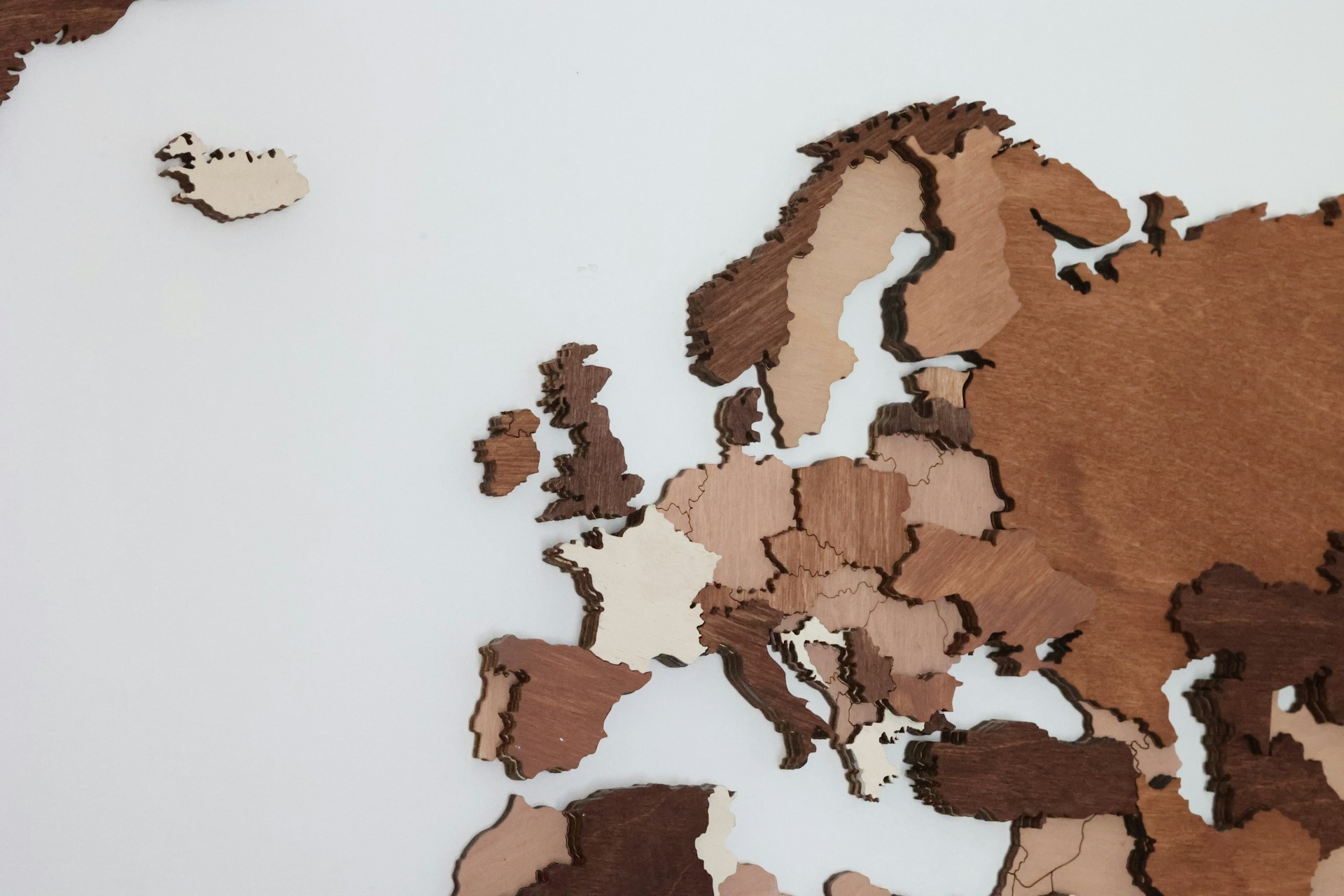
| Photo by Tahmeed Ahmad on Unsplash |
The challenges: energy, trade shocks, and innovation pressure
Europe has endured a rough cycle.
After COVID-19, inflation peaked in 2022–2023 as energy prices spiked after Russia’s invasion of Ukraine, straining households and manufacturers. The World Bank and IMF both underline how war-driven supply and trade disruptions fed inflation and uncertainty across the region (cf. World Bank brief & policy note, IMF Regional Economic Outlook, Oct 2025).
Disinflation has set in, but growth remains subdued relative to pre‑pandemic norms IMF WEO Oct 2025.
Industry-specific shocks are real too.
The automotive sector (long a backbone of European manufacturing) is wrestling with the pivot to electromobility amid intense Chinese competition and tariff turbulence. ACEA’s 2024/25 pocket guide and market report show falling EU production, modest sales growth, and a still-positive but narrowing trade surplus (ACEA Pocket Guide 2024/25, ACEA Economic & Market Report 2024). The European Commission has imposed countervailing duties on subsidised Chinese EV imports to protect EU producers (EC press release & Access2Markets note).
On innovation, the EU’s AI investment gap persists.
Recent analysis shows US private AI investment dwarfing the EU, with China also ahead. The EU and UK together attracted ~ EUR 9 billion (European Parliament research service, 2024). The OECD adds that AI adoption and productivity gains are concentrated among larger firms, risking wider gaps unless complementary assets (skills, ICT infrastructure, management capabilities) scale broadly (OECD AI adoption brief, 2024, OECD Productivity Indicators, 2024).
Political shifts: protectionism and fragmentation risks
The political center of gravity has shifted in several countries and in the European Parliament towards more nationalist or protectionist stances.
ECFR’s pre‑ and post‑election analyses detail how these currents are reshaping policy priorities and foreign‑policy positions (ECFR forecast & post‑2025 analyses). That matters economically: slower EU decision‑making and more fragmented market rules can raise uncertainty and slow investment, a point echoed in IMF’s Europe outlook (IMF REO Europe, Oct 2025).
The strengths: quality of life, stability, and trust infrastructure
Here’s the part the doom-scroll often misses: Europe still leads the world on lived quality.
In 2025, seven of the top ten countries in Numbeo’s Quality of Life index are European, with Luxembourg, the Netherlands, Denmark, Switzerland, Finland, Iceland, and Norway clustered at the top (Numbeo 2025 ranking, Statista 2025). Stability, healthcare, safety, and predictable institutions are durable assets. This keeps especially true in volatile times.
Europe’s trust infrastructure also matters. Strong data-protection standards (GDPR) don’t just protect citizens. They build long‑term confidence and reduce security incidents (EDPB overview & benefits).
The regulation dilemma: safety vs. speed
Regulation is both Europe’s superpower and stumbling block.
Guardrails (from consumer safety to data protection) underpin high living standards (EDPB guidance and benefits). But when rules multiply faster than markets adapt, innovation slows.
Recent policy steps (like the AI Act) aim to pair responsibility with competitiveness. However, success hinges on practical implementation, clarity for SMEs and timely infrastructure investment (WEF policy explainer on Europe’s AI adoption, 2025).
And now? What this means for you (leaders, teams, …)
Europe’s story is not collapse. It’s a transition.
High quality of life and trust institutions are strengths you can leverage while adapting to a more competitive, tech‑intensive economy. Here’s how the macro ties to your micro:
1) Your buying power and costs
- Energy & inflation: The acute energy shock has eased, but price levels remain higher than in the 2010s. Budget with a conservative baseline and build energy efficiency into decisions. Macros point to lower inflation but slower growth in advanced Europe (IMF WEO Oct 2025).
- Housing & commuting: Quality‑of‑life indices show affordability and commute time matters materially to well-being. Local trade‑offs (rent vs. transport) will dominate everyone’s personal inflation basket. You can optimize for shorter commutes or hybrid work where possible (Numbeo 2025, EU subindices).
2) Your job and career resilience
- Skill bar is rising: AI‑enabled workflows are becoming standard in high‑productivity firms. The adoption gap hurts smaller companies. Invest in transferable skills: data literacy, critical thinking, and process automation. These skills map directly onto productivity differentials highlighted by the OECD (OECD AI adoption brief).
- Sector realities: If you’re in automotive or advanced manufacturing, expect continued supply‑chain reconfiguration and EV‑centric competition. Follow ACEA updates to anticipate demand and talent needs in electrification, charging infrastructure and software (ACEA Pocket Guide, ACEA Market Report).
- Leadership takeaway: In a low-growth environment, management quality becomes your edge. You should focus on clarity of priorities, operating cadence, and talent development. These out‑perform blunt cost cutting. The IMF and OECD repeatedly flag structural reform and productivity uplift as decisive (IMF REO Europe, OECD Productivity Indicators).
3) Your company’s strategy
- Compete on speed and trust: Pair responsible AI with faster decision cycles. Europe’s regulatory baseline is a trust dividend if you can still ship quickly. Use “guardrail‑first” product design, but kill internal latency: shorter approval chains, clearer risk criteria, empowered teams (WEF Europe AI adoption insights).
- De‑risk supply chains: The Commission’s EV duties signal a tougher trade stance. You should expect more rule changes at the border. Diversify suppliers, build dual sourcing and scenario-plan tariffs/countermeasures (EC EV duties press materials).
- Finance & capex: With growth modest, ROI scrutiny intensifies. Prioritise projects that raise per-employee output (automation, analytics, quality systems). OECD data on ICT investment share of GDP helps benchmark where to lean in (OECD ICT investment indicator).
4) Your civic lens
- Policy matters to your day‑to‑day: Political fragmentation can slow market integration and capital mobility, feeding uncertainty that shows up in prices, job prospects, and retirement savings. Track credible outlooks (IMF, World Bank) and vote for policy agendas that reduce friction and reward innovation (IMF WEO & Europe REO).
- Guardrails you can trust: Whatever the noise, Europe’s data‑protection regime continues to protect consumer rights and enforce against abuse. This truly is an everyday quality‑of‑life anchor for digital citizens (EDPB materials).
A personal note: turning pessimism into agency
If you manage people, lead projects, or simply want a better life in your city, here’s the mindset shift I’m making:
- Believe in Europe’s baseline and add your speed. The continent’s strengths (safety, healthcare, education, rule of law) are real. Your job is to layer speed and focus on top: fewer priorities, tighter sprints, faster feedback loops. That’s how you convert macro stability into micro momentum (IMF REO Europe on structural bottlenecks).
- Build AI‑ready habits, not just tools. Don’t wait for the perfect platforms. Start with daily micro‑automations: summarise meetings, auto‑classify inboxes, script spreadsheet checks. Skills compound. Teams that upskill early are the ones that scale productivity later (OECD AI adoption dynamics).
- De‑risk your household like a CFO. Fix the basics: energy efficiency at home, a 3–6 month cash buffer, and diversified savings. In low‑growth periods, resilience is a competitive advantage for families too (IMF WEO disinflation + subdued growth).
- Stay globally curious, locally anchored. Tariffs and geopolitics will keep moving. Your counter is optionality: multiple suppliers, portable skills, and a network across borders (even if you never move). Curiosity is strategy when the map keeps changing (EC EV duties, World Bank trade impact notes).
- Choose constructive narratives. Growth happens where people believe in the future. Europe isn’t perfect, but it’s far stronger than the doom narrative suggests (just look at quality-of-life rankings). Use that confidence to invest in your craft, your team, and your community (Numbeo 2025).
In a world full of uncertainty, Europe’s greatest strength is its ability to adapt, unite, and keep moving forward - reminding us all that progress begins with perspective and the courage to shape our own future.
Sources & quick reads
- IMF World Economic Outlook (Oct 2025) • IMF Regional Outlook: Europe (Oct 2025)
- World Bank: Europe & Central Asia Economic Update (2025) • War in Ukraine: Trade & Investment Impacts
- ACEA Pocket Guide 2024/25 • ACEA Economic & Market Report 2024
- European Commission: Duties on Chinese EVs (2024)
- OECD: Productivity Indicators (2024) • OECD: AI Adoption & Inclusive Growth (2024)
- Numbeo Quality of Life 2025 • Statista EU QoL overview (2025)
- EDPB: GDPR benefits & guidance
- WEF: Europe’s AI adoption—how to close the gap (2025)
Thank you so much for reading.
I’ve wanted to write about Europe’s current economic situation for quite some time. At first, I was intimidated by the amount of research needed to support my statements with reliable sources. But I decided to go through with it—starting with manual research, drafting my thoughts, and then using generative AI to add more evidence during editing. This workflow helped me finish the article and confidently share it online.
What’s your opinion on the current situation in Europe? I’d love to hear your thoughts. Feel free to reach out to me on LinkedIn!